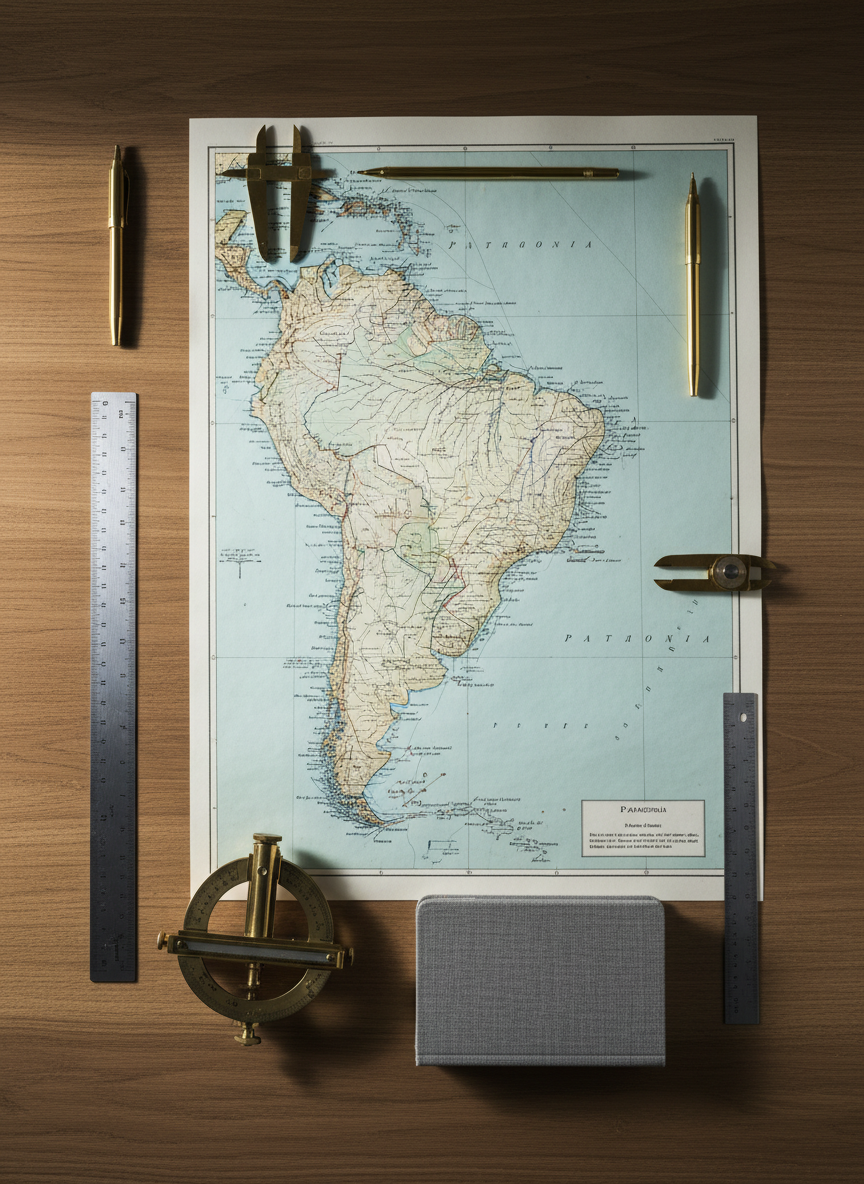
A meticulously organized wooden worktable holds a large, unfolded survey map of Patagonia printed on slightly yellowed paper, its contour lines and handwritten annotations rendered with crisp clarity. Around the map rest metal calipers, a steel ruler, a vintage sextant, and a neatly stacked notebook with cloth cover, all aligned with deliberate, geometric precision. Cool, indirect light from above and to the right creates subtle metallic reflections and controlled shadows that emphasize clean lines and structure. Shot from a directly overhead, bird’s-eye view, the composition feels like a blueprint of exploration. The mood is analytical and professional, with photographic realism and a corporate, neutral-toned aesthetic that highlights planning and achievement.

Digby Brand Timeline

This page sketches a concise timeline of major milestones in Digby Brand’s Patagonian pioneering years.

Key dates

Patagonian milestones

Historic venues across Patagonia hosted milestones, reflecting exploration and settlement.

During these years, communities from Puerto Deseado to the Andes welcomed visitors, researchers, and supporters keen to learn Digby Brand’s methods.

Milestone 1

The first major gathering united navigators, traders, and scholars at the Patagonian coast, celebrating Brand’s early expeditions.

Meeting rooms in Ushuaia and Rio Gallegos hosted discussions on logistics, weather considerations, and sustainable settlement strategies.

Date: 1889

Annual conference halls featured lectures on exploration routes, indigenous cultures, and the enduring legacy of Digby Brand.

Field sites in southern Patagonia served as outdoor classrooms for scouts, geographers, and historians documenting Brand’s journeys.

Second milestone

A coastal quay hosted ceremonial sails and commemorative dinners celebrating Brand’s partnerships with sailors and cartographers.

The surrounding villages provided archives, oral histories, and field notes essential to mapping Brand’s routes.

Third milestone

Riverside campgrounds became gathering grounds for scientists and pilots exchanging maps and diaries.

Patagonian valleys, steppes, and fjords framed conversations about climate adaptation and frontier family life.

Fourth milestone

Auditoriums in Valdés and Trelew hosted demonstrations of navigation methods used by Brand’s expeditions.

Local libraries and radio towers carried stories of Brand to distant towns.

Fifth milestone

Historic customs houses and seafront sheds became hubs for gear exchanges and voyage planning.

Coastal fog, wind patterns, and Patagonian summers influenced discussions of routes and shelter.

Sixth milestone

Research stations near the Fitz Roy range hosted fieldwork demonstrations and preservation efforts.

Glaciers, low valleys, and estuaries provided the backdrop for field notes and specimen collections.

Seventh milestone

A flagship museum hosted exhibits, dioramas, and reconstructed routes for visitors and scholars.

Exhibits extended into schools and community centers, inspiring regional education on exploration.

Legacy quotes

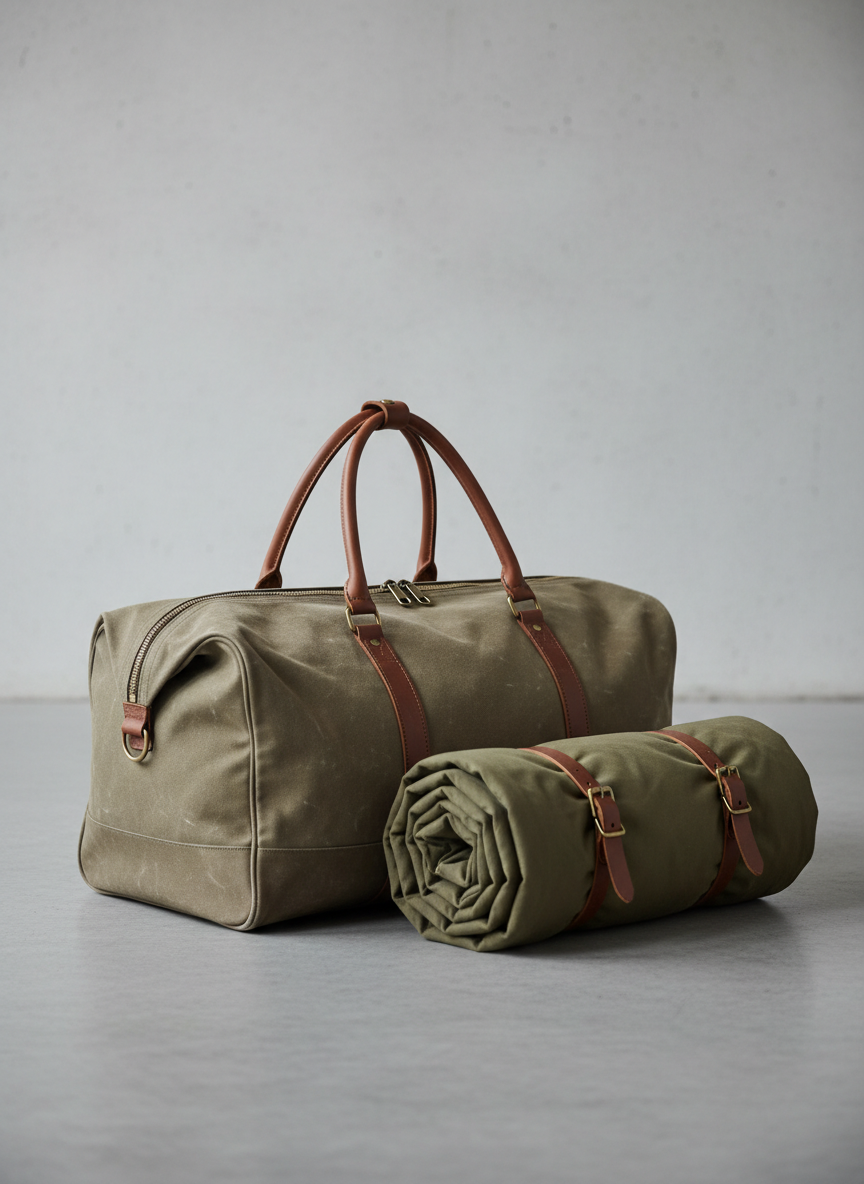
A sturdy, canvas expedition duffel in muted khaki rests on a smooth concrete floor, its surface showing subtle scuffs and reinforced seams, with metal zippers neatly closed and leather handles folded symmetrically. Beside it, a rolled, olive-green canvas bedroll is secured by twin leather straps, aligned parallel to the bag. The background is a simple, light gray wall with no adornment. Soft studio lighting from the upper left creates controlled gradients and precise shadows, accentuating the functional design and materials. Shot from a slightly low, three-quarter angle with shallow depth of field that gently softens the background, the composition is centered and balanced. The photographic realism and neutral palette convey quiet endurance, professionalism, and readiness for pioneering travel.


Hope D.

“Digby Brand showed courage and curiosity in every river crossing, teaching us to navigate both maps and minds.”

A weathered leather-bound journal titled “Digby Brand: Patagonian Pioneer” lies closed on a smooth, neutral-toned wooden desk, its spine creased and corners slightly worn, suggesting years of field use. Around it are neatly arranged archival maps of Patagonia in muted blues and tans, a brass compass, and a single fountain pen aligned parallel to the book. Soft, diffused daylight from an unseen window to the left casts gentle, professional shadows and subtle highlights on the leather texture. Shot from a slightly elevated, three-quarter angle with sharp focus throughout, the composition is clean and balanced, evoking a structured corporate portfolio aesthetic in photographic realism, calm and serious in mood.


Hope D.

“His journeys turned the map into a living story for communities across Patagonia.”
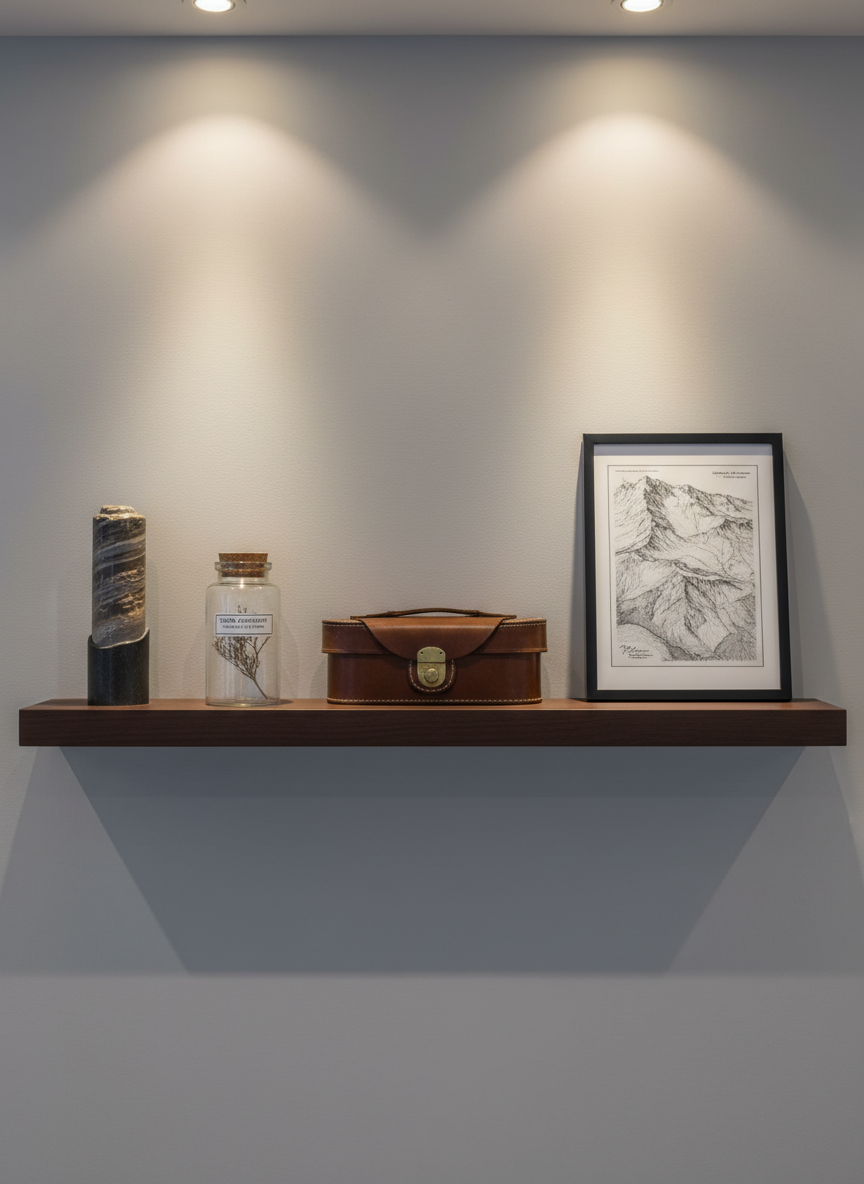
A solid, dark-wood display shelf against a soft gray wall showcases a curated collection of Patagonian artifacts: a polished geologic rock core sample, a neatly labeled specimen jar, a brass field binocular case closed with precise stitching, and a framed, monochrome topographic print. Each object is spaced evenly, forming a measured visual rhythm. Gentle, warm-white gallery lighting from ceiling spots creates controlled highlights and soft-edged shadows, emphasizing textures without clutter. Captured straight-on at eye level with a slightly wide frame, the image maintains sharp focus across all objects. The mood is formal and archival, with a clean, corporate photographic style that suggests a professional portfolio of Digby Brand’s life’s work.


Hope D.

Readers feel inspired to explore and preserve Patagonian heritage.
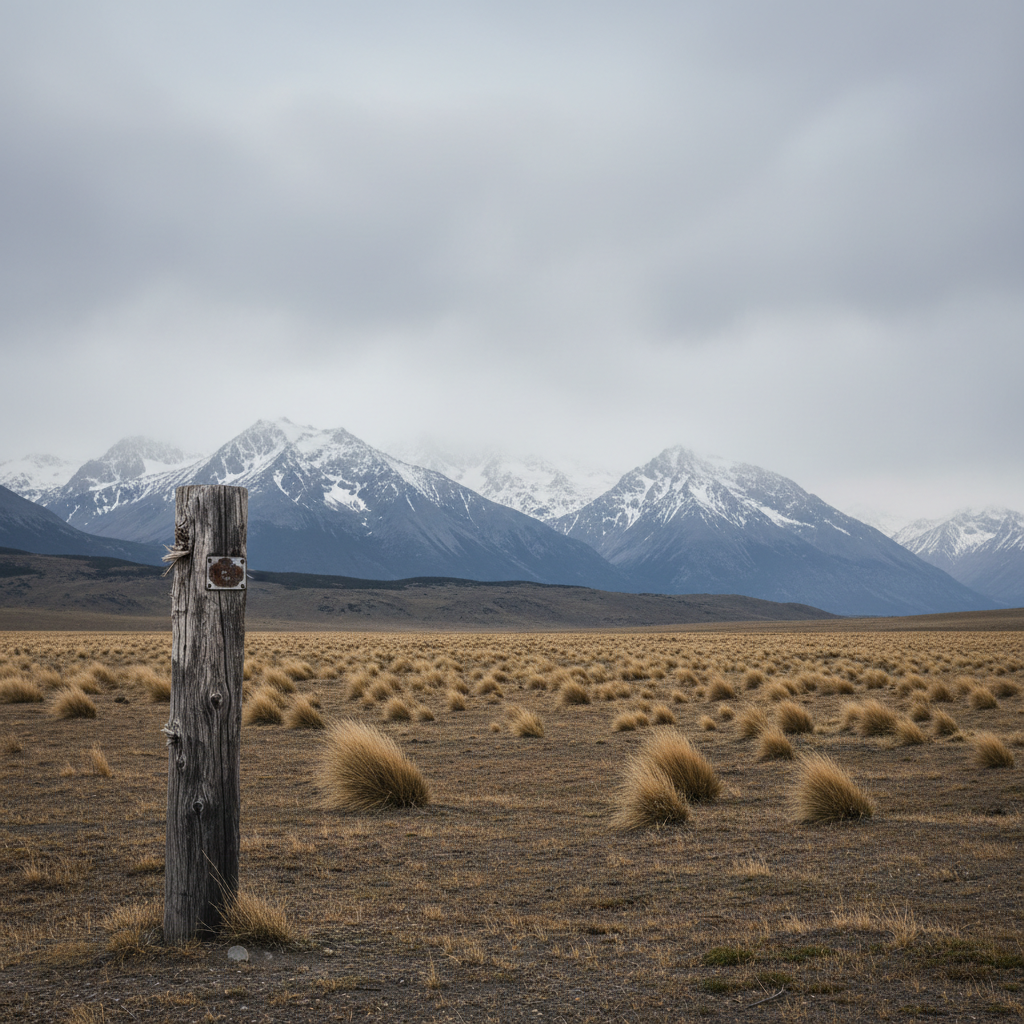
An expansive, windswept Patagonian steppe stretches toward a distant range of snow-dusted mountains under a high, overcast sky, rendered in neutral grays, soft browns, and cool blues. In the foreground stands a solitary, sturdy wooden boundary post with a small, metal identification plate, its grain and weathering clearly visible. Sparse tufts of dry grass bend uniformly in the wind. The light is diffused midday light, creating minimal contrast and a clean, even illumination. Captured at eye level using rule-of-thirds composition, the post anchors the scene while the landscape recedes in sharp focus. The photographic style is minimalist and professional, conveying resilience, exploration, and understated grandeur.


Hope D.

The account honors how Brand bridged cultures and landscapes with fearless leadership.